 Scaling sustainable shipping with fuel cell insights from DLR in zero4cruise
Marine
6 minute read
Scaling sustainable shipping with fuel cell insights from DLR in zero4cruise
Marine
6 minute read
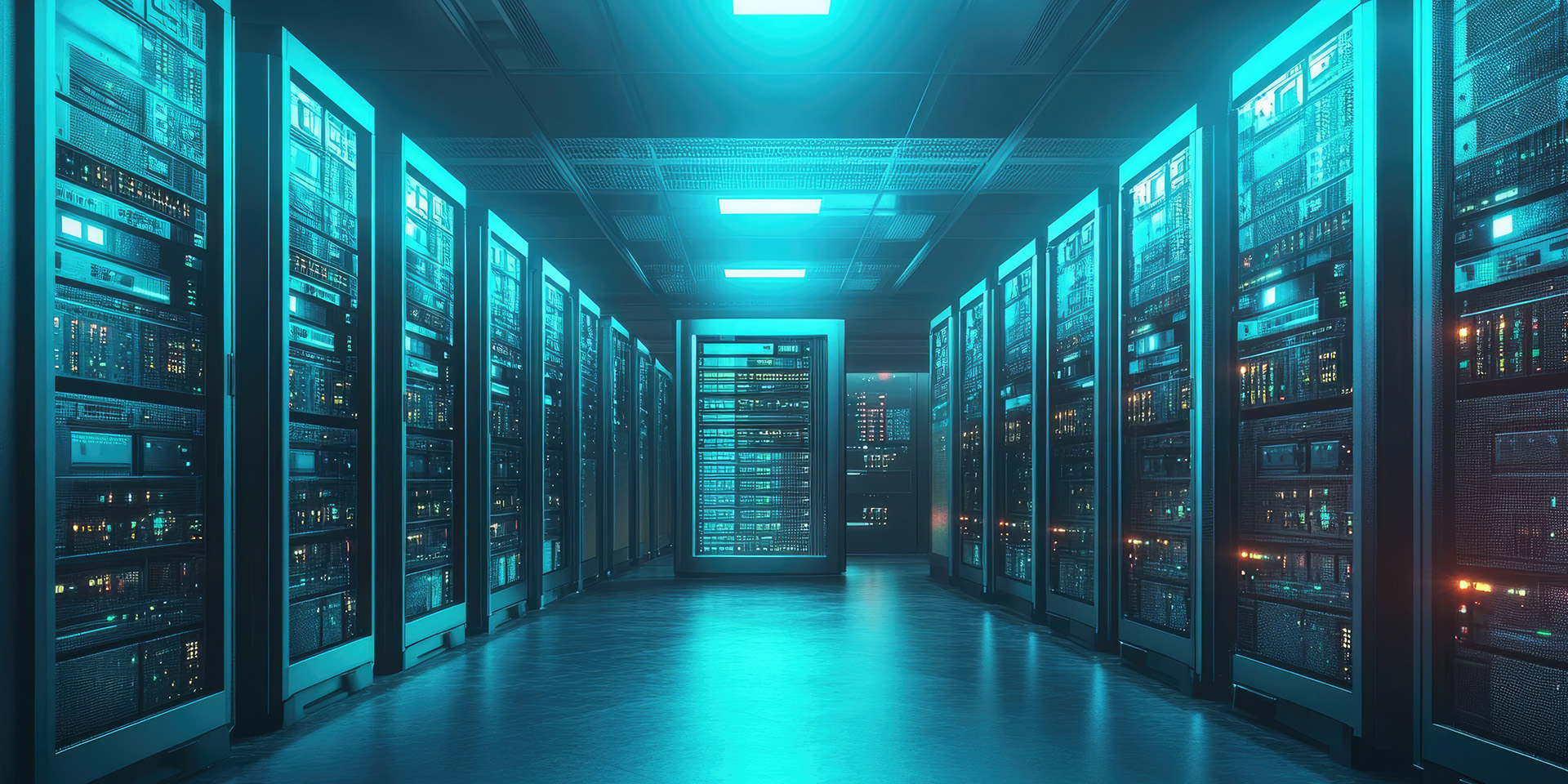
Consider a developer trying to bring a new load online today — a data centre, a port expansion, an electrified industrial site. They have the capital. They have the equipment. They have the site. And they cannot get the power. In the major markets, the wait for a new grid connection now runs to roughly five years, and in the most constrained corridors longer still. The money is there; the megawatts are not.
That single constraint is quietly rewriting how energy systems are designed. For over a century, the discipline was straightforward: generate energy efficiently and deliver it reliably. That challenge remains, but it is no longer the only one, and for a growing number of customers it is no longer the binding one. As energy systems become more distributed, interconnected and dynamic, drawing on a far wider range of generation technologies, the question is shifting — from how we generate energy to how we orchestrate it.
“What is emerging is a new layer on top of generation — and increasingly, the layer where value is decided.”
Let me be precise about what this is not. It is not a move away from power generation, and it does not make generation matter less. Generation demand is rising, not falling, and the efficiency and reliability of the generating asset remain as important as they ever were. What is emerging is a new layer on top of generation — and increasingly, the layer where value is decided. Where individual assets once operated largely on their own, modern systems are becoming interconnected networks of renewables, storage, dispatchable generation, alternative fuels and digital control, working as integrated hybrids. Performance is no longer defined by the capability of any single asset, but by how effectively those assets interact, respond and adapt in real time.
Several structural changes are arriving at once, and individually none of them is new. Together they are reshaping how energy systems behave:
The cumulative effect is a shift of focus away from optimising single assets in isolation towards optimising entire systems. Efficiency, cost and reliability remain essential. But they are now joined by a second set of properties that decide whether a system holds together: flexibility, responsiveness, modularity, interoperability, redundancy, cyber resilience, and the ability to balance supply and demand dynamically.
“The first phase of the energy transition was about cleaner generation. The next phase is increasingly about coordinating it.”
In short, the industry is moving from optimising generators to orchestrating systems. The first phase of the energy transition was about cleaner generation. The next phase is increasingly about coordinating it. In this landscape no single technology is likely to dominate; value will come from how well different technologies are combined, and in what combination they are used. Energy orchestration is reaching a level of importance equal to energy generation itself.
It is worth being clear about why value moves this way, because it is not fashion. For most of the last century the scarce, hard problem was generating clean power efficiently, so that is where value sat. That problem has not been solved, but it is no longer the one that constrains the customer. The binding constraint has shifted — to grid access, to balancing variable supply, to holding a heterogeneous system together under real load. Value follows the binding constraint. As the difficult problem moves from producing power to coordinating it, the scarce skill, and the margin, move with it. That is why the coordination layer is becoming the place where advantage is decided: not because software is fashionable, but because coordination is now the hard part.
Artificial intelligence and data centres dominate today’s energy conversation — rapid demand growth, large-scale build-out, increasingly strict reliability requirements. They have become the most visible indicator of where energy systems are heading. But they are better understood as a signal than a root cause. The stresses now attributed to AI — grid constraints, connection delays, balancing requirements, renewable integration, resilience — were already building for years. AI did not create them; it concentrated them, at a scale that made them impossible to ignore. The strain is now visible in the market itself: in December 2025 the largest US capacity market cleared a reliability shortfall of around 6.6 gigawatts — roughly the demand of a major city — at a record capacity price.
“The canary was never the cause of the problem; it was the first visible sign that conditions had changed.”
Miners once carried canaries underground because the bird registered danger before any person could. The canary was never the cause of the problem; it was the first visible sign that conditions had changed. AI infrastructure is playing that role now. Its scale and pace expose stresses increasingly present across ports facing electrified logistics, airports planning for new fuels, industrial sites seeking independence from a constrained grid, utilities managing variable generation, and cities whose core services are electrifying. The sectors differ; the underlying system challenge increasingly looks the same — moving from simply securing supply to coordinating multiple sources, storage technologies, fuels and loads within constrained and evolving infrastructure.
AI is therefore not an exception. It is an early and highly visible expression of a transformation already underway across critical infrastructure. It did not create the need for a new approach to energy. It simply made the future arrive sooner.
If orchestration is the question, a sharper one follows: what makes an asset valuable inside an orchestrated system? It is not only how much clean power it produces. It is how well it lets the system respond. A power plant is no longer evaluated simply as a power plant, a battery no longer simply as a battery, a fuel cell no longer simply as a generator. Each derives value increasingly from how it contributes to the whole.
This is where a real distinction opens up, and it is easy to miss if you still judge assets in isolation. Some generating technologies are built to run flat — efficient and reliable at a steady output, but slow to change state, by their very physics. They are excellent at holding a baseline and poor at following a load that moves. To make such an asset behave dynamically, the system has to compensate for it: oversize it, or place storage in front of it to absorb the swings the asset itself cannot. That works — but it is orchestration by brute force, adding hardware to mask a rigid core. The asset is not participating in the dynamics of the system; it is being insulated from them, at cost.
The alternative is to build dynamic response into the generating asset itself — a source that follows the load natively, so the system can lean on it directly rather than padding around it. In a world of variable renewables, steep ramps and real-time balancing, this is not a detail. Static capacity and dispatchable capacity are not the same product, even when they share a nameplate rating, and the gap between them is precisely where orchestration is won or lost.
“Static capacity and dispatchable capacity are not the same product, even when they share a nameplate rating, and the gap between them is precisely where orchestration is won or lost.”
None of this diminishes steady, efficient baseload generation — it remains essential, and for some applications it is exactly right. The point is narrower: a system optimised for orchestration assigns disproportionate value to its most responsive nodes, because those are the ones the orchestration layer can actually use.
This is also where the role of batteries has to be stated honestly, because they are the cheapest and fastest-scaling flexibility the market has ever seen — four-hour storage now sits near record-low cost and is being deployed at scale, and for short, fast swings it is often the right answer. But batteries are not a general solution; they are a duration solution. Lithium storage is economic where it cycles frequently over a few hours, and the economics break down as duration extends — most installed storage sits in the one-to-four-hour band, while multi-day and seasonal needs still require a dispatchable backstop. So the real question inside an orchestrated system is not fuel cell versus battery. It is which layer carries which job: fast storage for the short, frequent swings, and dispatchable generation that can run for hours or days for sustained load and resilience. The two are complements, and the orchestration layer is what combines them.
Fuel cells sit naturally on the dispatchable side of that line — not only because they can run on hydrogen produced from surplus renewable generation, which gives them genuine fuel flexibility, but because the most responsive among them follow dynamic load directly rather than being propped up to fake it. The honest caveat belongs here too: hydrogen today is expensive and its round-trip efficiency is poor against grid power, and pretending otherwise would be the kind of claim this piece is trying to avoid. The case is not that hydrogen is cheap. It is that for sustained, grid-independent, dispatchable resilience — precisely the job where batteries become uneconomic — the value the asset creates in the system can justify a cost that does not yet win on a standalone spec sheet. That is a system argument, not a component one, which is the whole point.

Most discussion of orchestration stays at the altitude of the grid: regions, markets, the system as a whole. That is real. But the same principle now reaches down to the single site — and for customers, that is where it stops being a theme and becomes a decision.
Return to the developer who cannot secure a full grid connection. The rational response is to ask less of the grid: take what the utility can provide, and build the rest behind the meter. The moment they do, their installation stops being a simple connection and becomes a hybrid energy system in miniature — grid supply, batteries, renewables and dispatchable generation, each with different characteristics and different response times. And the logic compounds: the harder a site works to minimise what it draws from the grid, the more of its stability rests on coordinating those on-site sources in real time. That coordination is orchestration — not as a market abstraction, but as a concrete engineering problem inside a single fence line.
“Two capabilities, in combination, define the answer.”
Two capabilities, in combination, define the answer. A generating asset fast and flexible enough to absorb dynamic load directly, and a control layer intelligent enough to orchestrate it alongside grid, batteries and renewables in real time. Neither alone is sufficient: the responsive asset without orchestration is underused; the orchestration without a responsive asset has little to work with. Together they let an installation reduce its grid dependence without surrendering stability — which is exactly what the customer in the multi-year connection queue actually needs.
The future installation will be more complex than the simple connection it replaces. That should be said plainly, because complexity is neither free nor automatically a virtue. More sources, more interfaces and more control points mean more that can fail. Badly orchestrated, a complex system is simply a more fragile one.
But that is the whole point of orchestration. The same complexity that looks like more points of failure becomes, when coordinated well, the source of redundancy, flexibility and independence from any single supply. A site drawing on several sources is not hostage to one. A system that can shift load across grid, storage and on-site generation in real time can ride through disturbances that would take down a single-source connection. The complexity is what makes orchestration necessary; good orchestration is what turns that complexity into resilience rather than fragility — and, by letting clean, locally produced and variable sources carry more of the load without compromising reliability, into greater sustainability as well.
Complexity and resilience are not opposites here. The orchestration layer is what decides which of the two you end up with.
For decades, energy systems were optimised around generation, and value accrued to whoever generated most efficiently. That will remain true at the level of the individual asset. But increasingly, value will accrue one level up — to the technologies and architectures that contribute most to the performance, flexibility and resilience of the system as a whole, both across society and inside each installation.
“And the assets that matter most will be the ones that do not merely produce power, but help the whole system move.”
The future of energy is unlikely to be defined by a single dominant generation technology. It is more likely to be defined by how well we orchestrate many — balancing efficiency, reliability, flexibility, resilience and security at the same time, from the grid down to the individual site. In that future, orchestration becomes as important as generation itself. And the assets that matter most will be the ones that do not merely produce power, but help the whole system move.
For the companies that build energy technology, the implication is direct. Increasingly they will be judged not only by the quality of the asset they deliver, but by how much value that asset creates once it becomes part of a larger system — how well it follows the load, integrates with the rest, and lets the whole installation hold together. That is a higher bar than the one the industry was built around. It is also, for the customer staring at a multi-year connection queue, the only one that has ever really mattered.
Richard Berkling
CEO, PowerCell Group

Are you looking for clean, resilient power for applications such as data centers or shore power? Discover our hydrogen fuel cell solutions and move towards more sustainable operations today.
Scaling sustainable shipping with fuel cell insights from DLR in zero4cruise
Marine
6 minute read
 Fuel-to-Power: Rethinking hydrogen availability
Power Generation
12 minute read
Fuel-to-Power: Rethinking hydrogen availability
Power Generation
12 minute read
 From Power Generation to Energy Orchestration
Power Generation
8 minute read
From Power Generation to Energy Orchestration
Power Generation
8 minute read
 Taking fuel cell durability to one million nautical miles in MiNaMi
Marine
5 minute read
Taking fuel cell durability to one million nautical miles in MiNaMi
Marine
5 minute read