 Scaling sustainable shipping with fuel cell insights from DLR in zero4cruise
Marine
6 minute read
Scaling sustainable shipping with fuel cell insights from DLR in zero4cruise
Marine
6 minute read
Shipping is entering a new chapter. Owners and operators face tighter emissions rules – including the EU’s FuelEU Maritime regulation – rising fuel costs and customer demand for greener logistics.
Hydrogen fuel cells offer a clear path to zero emission propulsion, but to move from projects to mainstream fleets the technology must meet the same commercial expectations as conventional prime movers: reliability, predictable availability and competitive lifetime costs.
MiNaMi gives the sector a platform to turn those aims into a megawatt scale reality. Is it possible to make a fuel cell last longer than the vessel it powers? And why does that matter?
MiNaMi (Million Nautical Mile Fuel Cell System) is an EU funded consortium bringing together PowerCell Group, SINTEF, VTT, ABB, Vaisala, DFDS, Allengra, CERTH and Fondazione Bruno Kessler. The partners are developing Europe’s first megawatt scale Proton Exchange Membrane (PEM) fuel cell system for maritime use.
The project targets a lifetime of 80,000 operating hours for a fuel cell system – more than one million nautical miles at 12.5 knots – and a system CAPEX below 1,000 €/kW. Expected results include a modular MW scale PEMFC building block, optimised architectures for installations above 10 MW, and advanced hydrogen and humidity sensor solutions that improve efficiency and lifetime by maximising hydrogen utilisation and minimising hydrogen emissions.
MiNaMi builds on lessons from the EU projects MARANDA, which developed a fuel cell‑based marine hybrid powertrain system, and H2Marine, which concentrated on stack development. Those efforts provided field learning about stack and system behaviour in marine conditions, and MiNaMi leverages that foundation to tackle integration, scalability and lifecycle performance at megawatt power levels. Together these projects map a clear pathway from component innovation to fleet-level readiness.
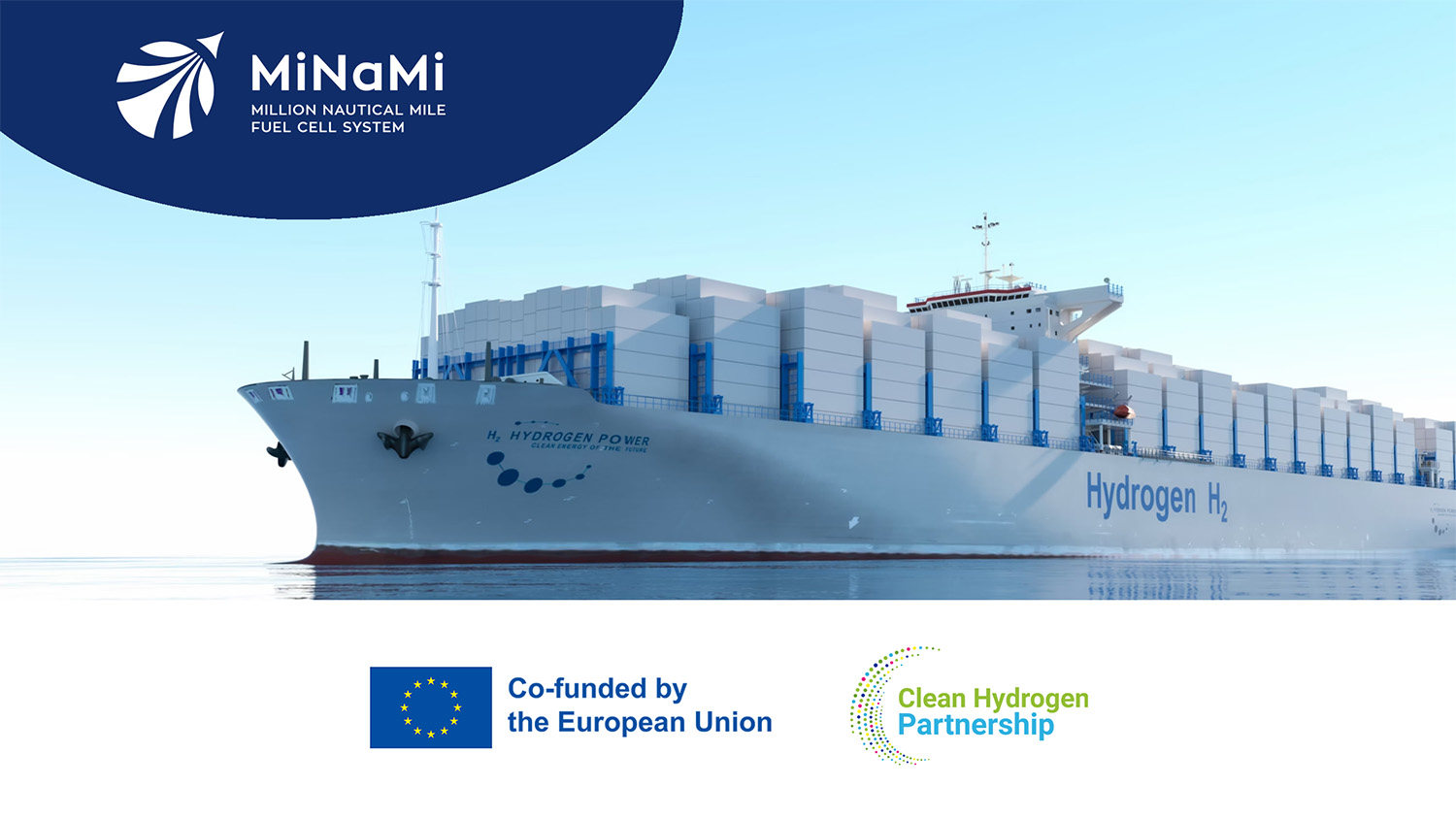
The MiNaMi project has received funding from the Fuel Cells and Hydrogen 2 Joint Undertaking under grant agreement No (101250260). This Joint Undertaking receives support from the European Union’s Horizon 2020 research and innovation programme, Hydrogen Europe and Hydrogen Europe research.
Ships are long lived capital assets. A newbuild can remain in service for 20 years or more; operators budget for maintenance cycles, overhaul windows and predictable downtimes. If a propulsion system needs frequent overhauls or unexpected repairs, it becomes a commercial liability regardless of its zero emission credentials. Durability is therefore central: it lowers total cost of ownership, protects schedules and reduces the need for spare capacity or redundant systems.
At the same time, durability is never just a fixed number on a datasheet. Actual lifetime depends strongly on how the vessel is operated: the typical power demand, how often it runs at partial or full load, the pattern of start stops and cold starts, and the overall operating profile (or “duty cycle”). A fuel cell system that is designed and validated for realistic marine duty cycles will age more predictably and deliver its performance over a longer period in real service.
Durability also shapes fleet decarbonisation strategies. When fuel cells show long, dependable service lives under representative operating conditions, financiers and charterers gain confidence and lending terms improve. That changes procurement decisions and makes hydrogen propulsion investable at scale. In short, durability aligns technical performance with commercial reality, and paired with PowerCell’s strong efficiency, those durability gains materially improve total cost of ownership for operators.
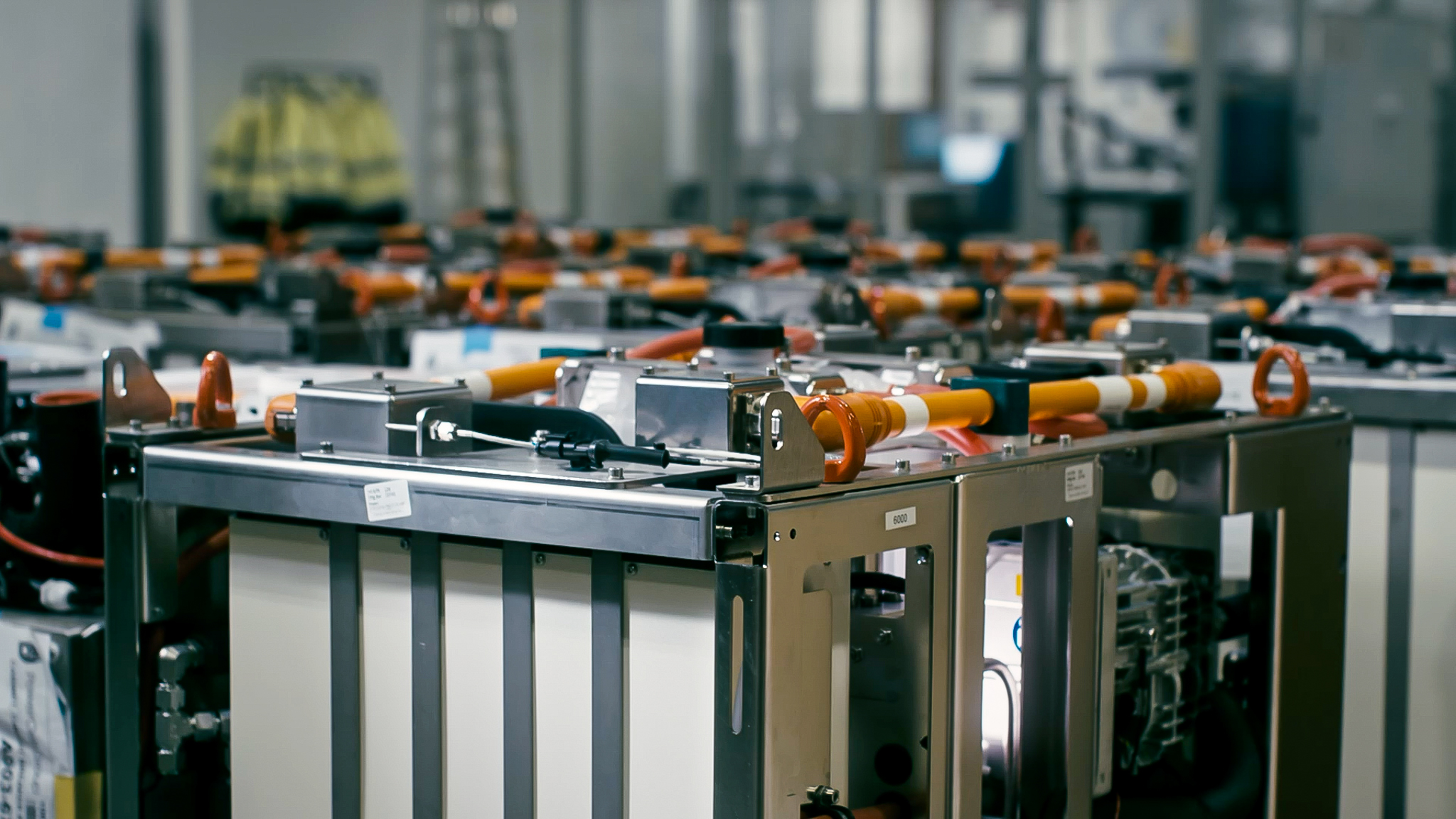
PowerCell contributes a mature fuel cell technology platform and deep experience in stack and system engineering, backed by strong industry partnerships. Prior commercialised units and demonstrations give practical insight into failure modes, balance‑of‑plant interactions and maintenance practices that determine lifetime.
We are also bringing our experience from the MARANDA project, where a hybrid powertrain system based on PEM fuel cells for marine applications was developed, and the previously mentioned H2Marine project, which focused on developing and validating fuel cell stacks, to inform materials choices and stack architecture for maritime operation.
In MiNaMi those insights will inform design choices, materials selection and operational strategies aimed at extending service intervals and reducing degradation, without compromising conversion efficiency.
“Over the past few years we have launched a new generation of marine fuel cell systems with significantly improved industrial stability, performance and durability. MiNaMi represents the natural next step, extending these capabilities towards ultra-long lifetime at megawatt scale.”
— Dr. Andreas Bodén, CTO, PowerCell Group

Dr. Andreas Bodén
Extending fuel cell lifetimes multiplies environmental benefits: fewer replacements mean lower cumulative embodied carbon from manufacturing and logistics, and improved operational predictability lets operators optimise duty cycles and energy management. These compound effects strengthen the net zero case: it becomes not just about zero tailpipe emissions but about minimising lifecycle impacts while making the economics viable.
Beyond carbon, durability reduces waste and supports practical end of life and circular strategies for fuel cell components. For shipyards, financiers and owners, long lifetime performance shifts hydrogen propulsion from an experimental technology to an investment grade solution.
“The benefits of durability compound: lower embodied carbon over the lifecycle, fewer interruptions to operations, and more predictable economics. Together they help fuel cells earn a place in mainstream shipping”
— Victor Åkerlund, Chief Analytics & Sustainability Officer, PowerCell Group

Victor Åkerlund
MiNaMi’s immediate work packages will define system architecture, accelerated testing regimes that replicate maritime duty cycles and integration pathways for balance of plant systems. Over the project lifecycle the consortium will validate materials, scale manufacturing approaches and run trials that demonstrate megawatt class operation in real conditions.
PowerCell will apply platform engineering, field data and industrial partnerships to ensure both component reliability and system resilience as the programme progresses. Each milestone, from component validation to integrated sea trials, will be measured against durability metrics and commercial criteria, so the project delivers not only technical proof but market readiness.

Durability is a crucial piece that can make hydrogen propulsion a mainstream choice for commercial shipping. PowerCell’s participation in MiNaMi is intended to translate stack know how into system reliability that matches, and even surpasses, the lifetime expectations of shipowners. Combined with PowerCell’s leading efficiency, it will be a crucial step toward fuel cells becoming a mainstream choice for clean industrial power.
Contact us to explore how durable fuel cell propulsion could fit your fleet, arrange a technical briefing or request our marine fuel cell information material.

Stig Kallestad, Business Manager Marine, PowerCell Group
Scaling sustainable shipping with fuel cell insights from DLR in zero4cruise
Marine
6 minute read
 Fuel-to-Power: Rethinking hydrogen availability
Power Generation
12 minute read
Fuel-to-Power: Rethinking hydrogen availability
Power Generation
12 minute read
 From Power Generation to Energy Orchestration
Power Generation
8 minute read
From Power Generation to Energy Orchestration
Power Generation
8 minute read
 Taking fuel cell durability to one million nautical miles in MiNaMi
Marine
5 minute read
Taking fuel cell durability to one million nautical miles in MiNaMi
Marine
5 minute read