Industrialised fuel cell systems. Developed in partnership with Bosch.
Data Center
Power Solutions

Industrialised fuel cell systems. Developed in partnership with Bosch.
Our modular hydrogen fuel cell systems deliver dependable, behind-the-meter electricity to help data centers get powered up sooner. Operating without combustion, they eliminate local emissions, cut noise and generate reusable water on site. The result is a resilient, community-friendly power solution that secures uptime and accelerates project timelines.
Accelerate your data center deployment with firm, behind-the-meter generation. Our modular fuel cell solutions give you dependable, clean power on your schedule, helping you build faster, meet sustainability goals and scale with confidence.
Speed to Power
Modular systems designed for rapid deployment and commissioning. Behind-the-meter generation that complements constrained grid capacity.
Speed to Resilience
Dispatchable power that supports uptime and operational continuity. Integrates with the grid, renewables, storage and energy management systems.
Speed to Permit
Hydrogen operation produces water, with the potential to be net-positive on site. Low local emissions and low-noise operation can support siting in constrained areas.
Speed to Scale
Fuel-flexible operation with hydrogen, reformed methanol, ammonia and natural gas options. Modular capacity that can expand as the data center and energy system evolve.
On-site, zero-emission hydrogen power systems engineered for mission-critical sites like data centers. Plug-and-play and fully modular, our solutions scale seamlessly from mobile kW units to megawatt-scale installations.
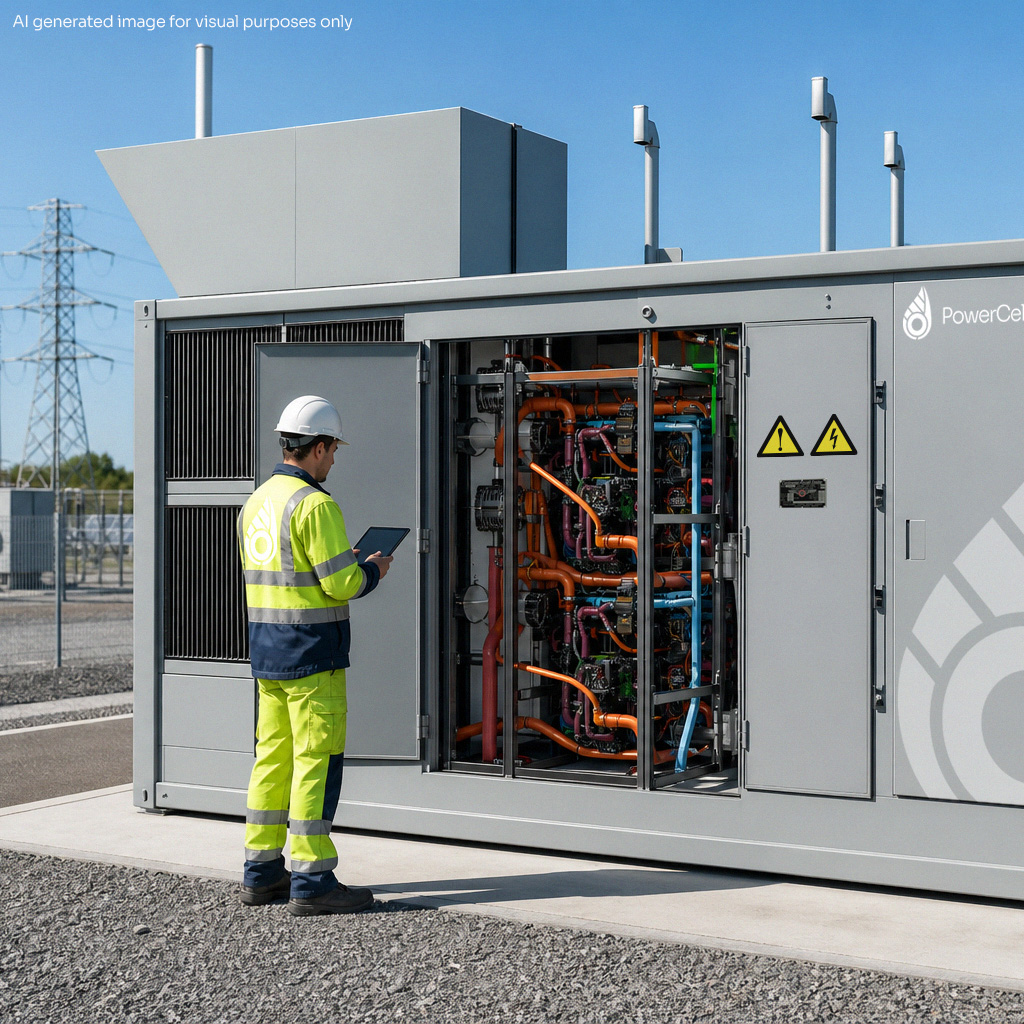
21 MW fuel cells can produce 65,000 US gallons of clean water / day
AI, cloud services and high-performance computing are driving a sharp rise in data center power demand. But grid connections can take years, while equipment lead times, permitting and local concerns about water use, emissions and noise add further pressure. Operators need dependable power and resilience without losing sight of sustainability or community expectations.
Fuel cells deliver reliable, continuous power with fast refuelling and low emissions. See the comparison below for what sets them apart from other power solutions.

Fuel Cells
Grid
No grid
needed
Connection
required
Rapid
deployment
Multi-year queues
Lower lifecycle
carbon posslbe
Emissions
depend on mix

Fuel Cells
Batteries
Continuous
operation
Limited runtime
Fast
refuelling
Charging required
Suited to
heavy-duty use
Possible capacity reductions

Fuel Cells
Diesel
Zero local
emissions
Harmful local emissions
Enabling fossil-free
operation
Fossil-fuelled
Simplifies
permitting
Permits face scrutiny

Fuel Cells
Gas Turbines
Zero local
emissions
CO₂ and NOx emissions
Efficient at
part load
Part-load efficiency penalty
Ready for
MW deployment
Long equipment lead times

PEM
SOFC
Low operating
temperature
High operating temperature
Starts, stops and
load-follows
Cycling degrades stacks
Compact, high
power density
May require more space
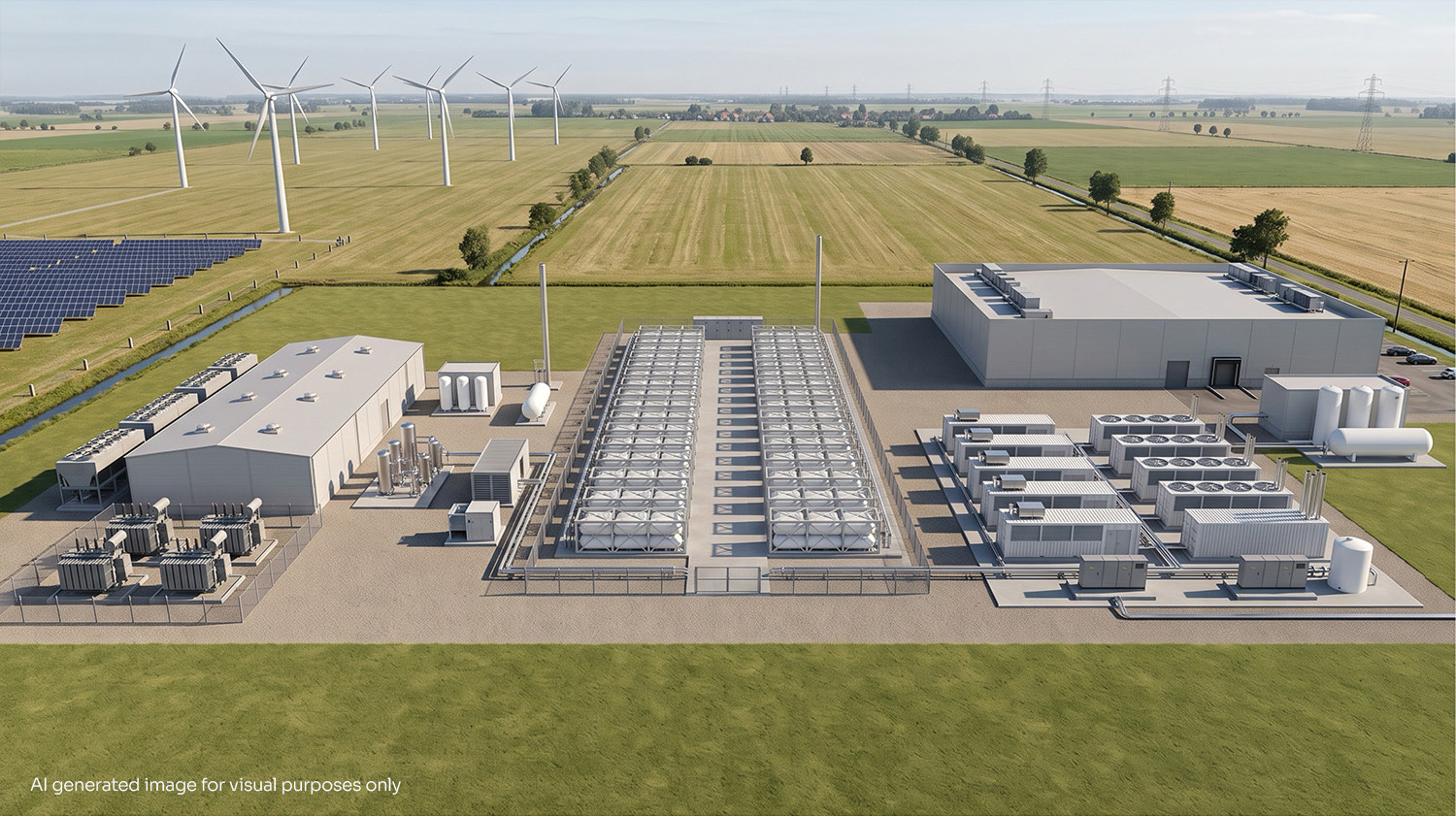
25 MW – Firming
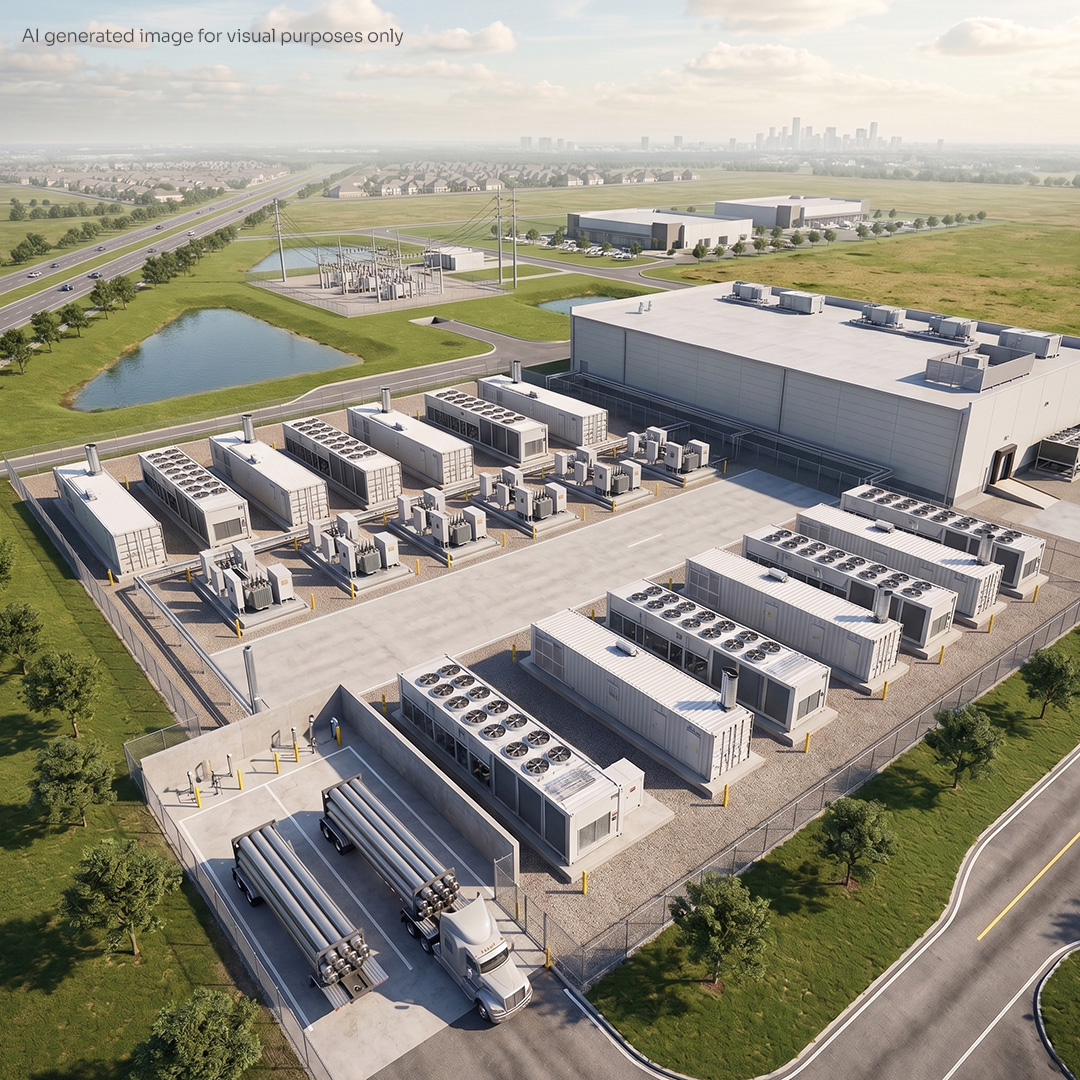
8 fuel cell containers and 8 cooling containers with 40 tonnes on-site hydrogen production per day, equal to about 1 day operation at full output (36 tonnes/day). 1.3 hectares (3.2 acres) footprint and a closed water loop from the water used by the electrolyser.
40 ft fuel cell module containers
40 ft cooling containers
DC/AC power converters
Hydrogen storage
Electrolyser
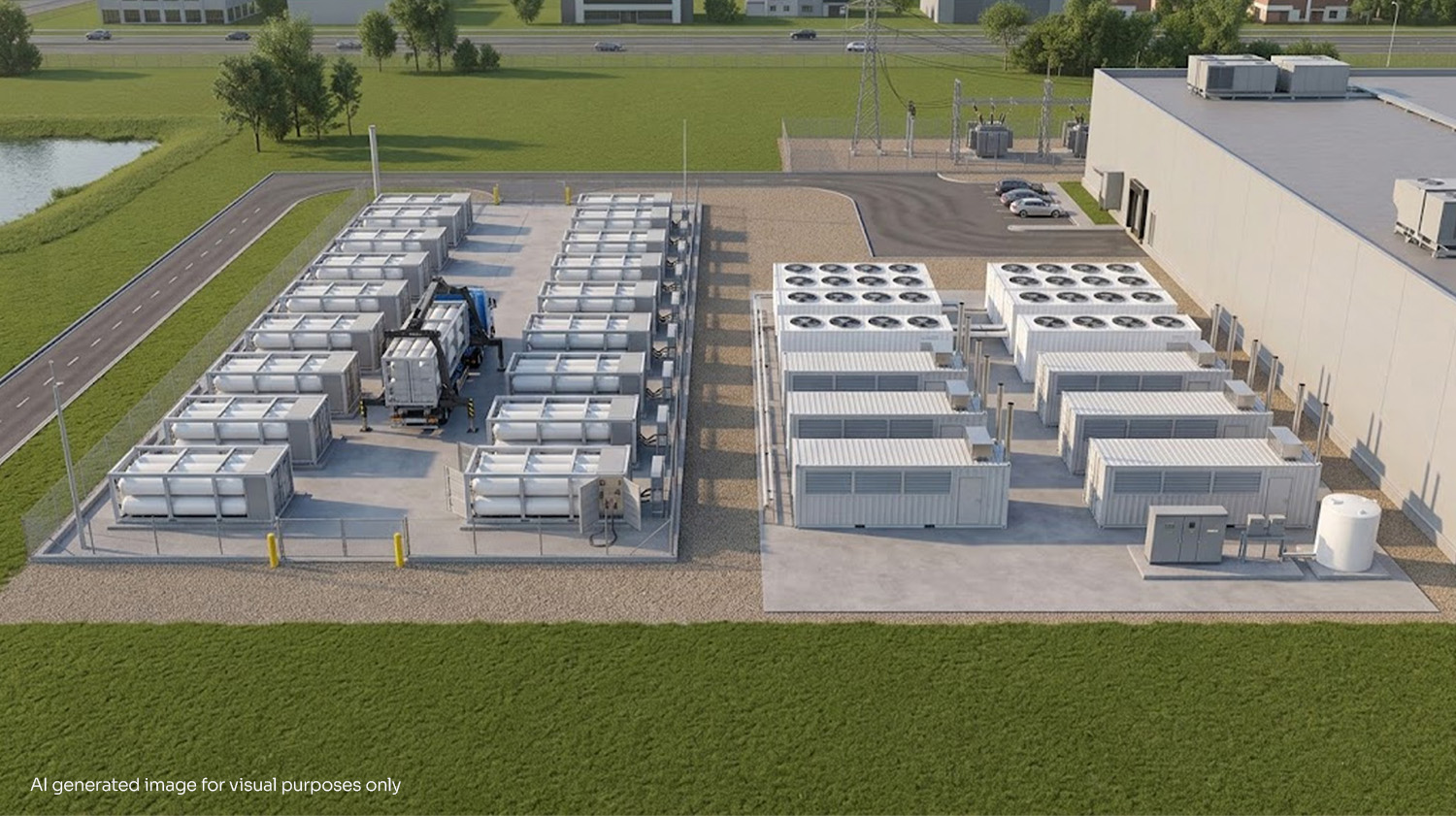
25 MW – Backup
12-hour backup installation with 8 fuel cell module containers and 8 cooling containers. 20 tonnes of hydrogen production in 12 hours at full load with a 0.3 hectares (3/4 acre) footprint for storage. One asset for backup, peak-shaving and firming, producing 160 tonnes of water per 12 hours event.
40 ft fuel cell module containers
40 ft cooling containers
DC/AC power converters
Hydrogen delivery
Hydrogen storage
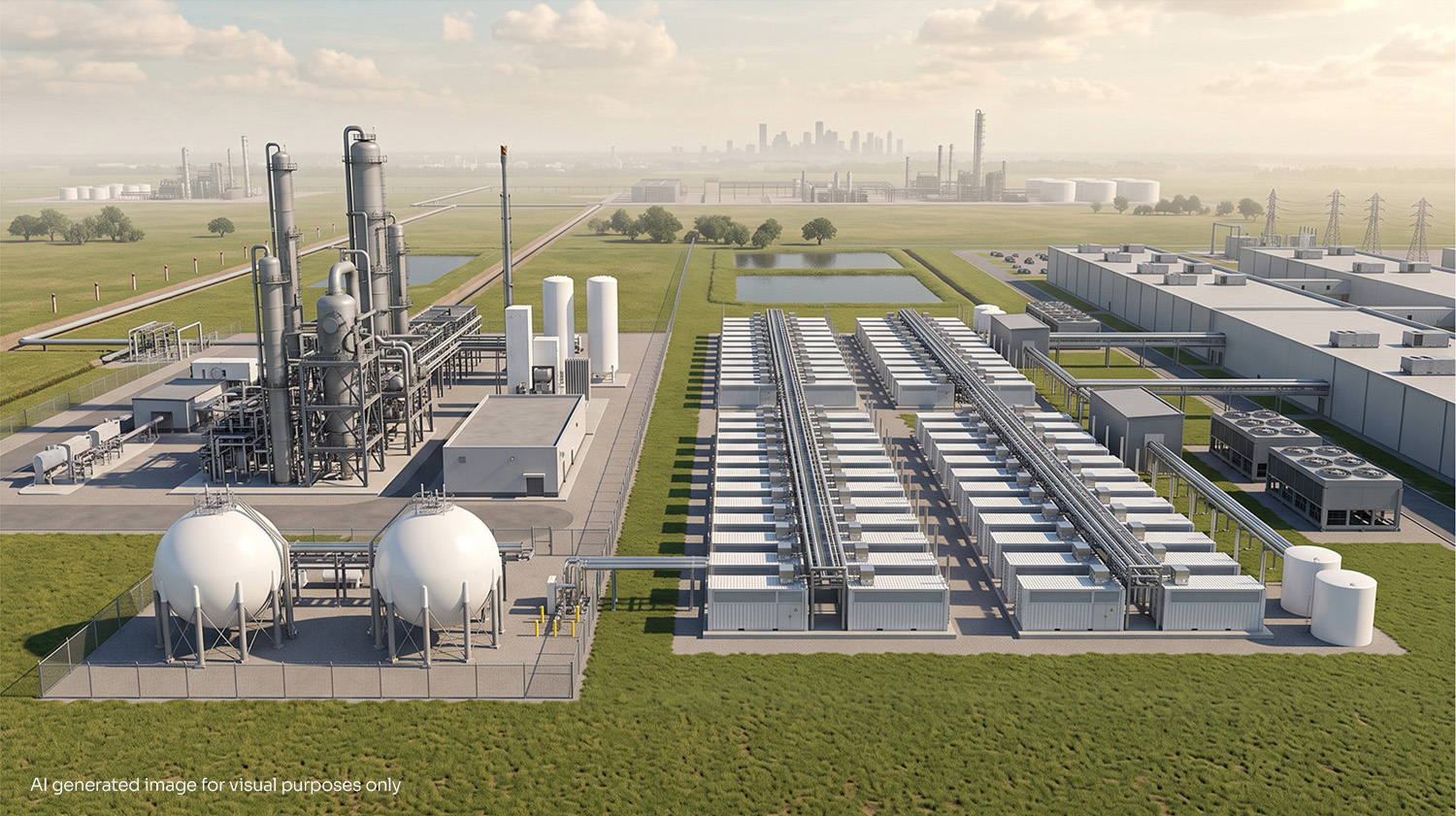
300 MW – Prime
95 containers in 2 condensed blocks. 430 tonnes hydrogen per day piped from ATR + CCS. 7 hectares (~17 acres) footprint. Around 15 g CO2/kWh at point of generation (excluding upstream gas). 1.2 million tonnes CO₂ per year captured, producing 3,900 tonnes of water per day.
Fuel cell module containers
Cooling facility
Hydrogen storage buffer
ATR with CCS reforming from natural gas
PowerSystem 190 is a hydrogen fuel cell module delivering 190 kW per unit within our on-site power solutions. It combines PowerCell and Bosch technology in a compact design for gensets and containerised systems. Multiple modules can be combined to scale capacity, with PowerCell’s Distributed Master Controller coordinating them as one system.
| Net output power (max) | 190 kW |
| Dimensions (W x D x H) | 720 × 980 × 800 mm |
| Weight (dry) | 330 kg |

The DMC coordinates multiple fuel cell units so they work together like one power source. It automatically shares the workload, helps the units run efficiently, and gives your energy management system one simple point of control. Making the system easier to manage and expand.
Optimised Efficiency
The DMC helps fuel cell systems operate at their optimal load points, supporting efficiency and extended product lifetime. This can help reduce total cost of ownership.
Unified Interface
Control multiple systems through a single interface. The DMC simplifies integration with supervisory control systems.
Built-in Redundancy
The DMC supports resilient operation by allowing any connected fuel cell system to take the primary role. This helps maintain power if operating needs or system availability change.
Flexible Integration
The DMC coordinates fuel cells with batteries, the grid and other power sources. It dynamically balances their contribution to meet changing power demands.

PowerCell brings fuel cell technology, application knowledge and system integration expertise. Bosch adds industrial innovation, strength and the experience of an established industrial partner. Together, we combine specialised fuel cell engineering with industrial rigour to deliver dependable, industrial-grade power solutions.
Together, we explore your power needs, infrastructure, available space, fuel supply and permitting considerations. From there, we help you understand what’s feasible and shape a solution around your needs. We’ll work with you through engineering, integration and commissioning, and support you as you bring capacity online and scale over time.
Grid delays, long equipment lead times, permitting hurdles, noise, emissions or water constraints can hold a project back. Get in touch and we’ll work with you to find a power solution that fits your site. Our fuel cell solutions can help you get reliable power sooner, with quiet operation and no local emissions.
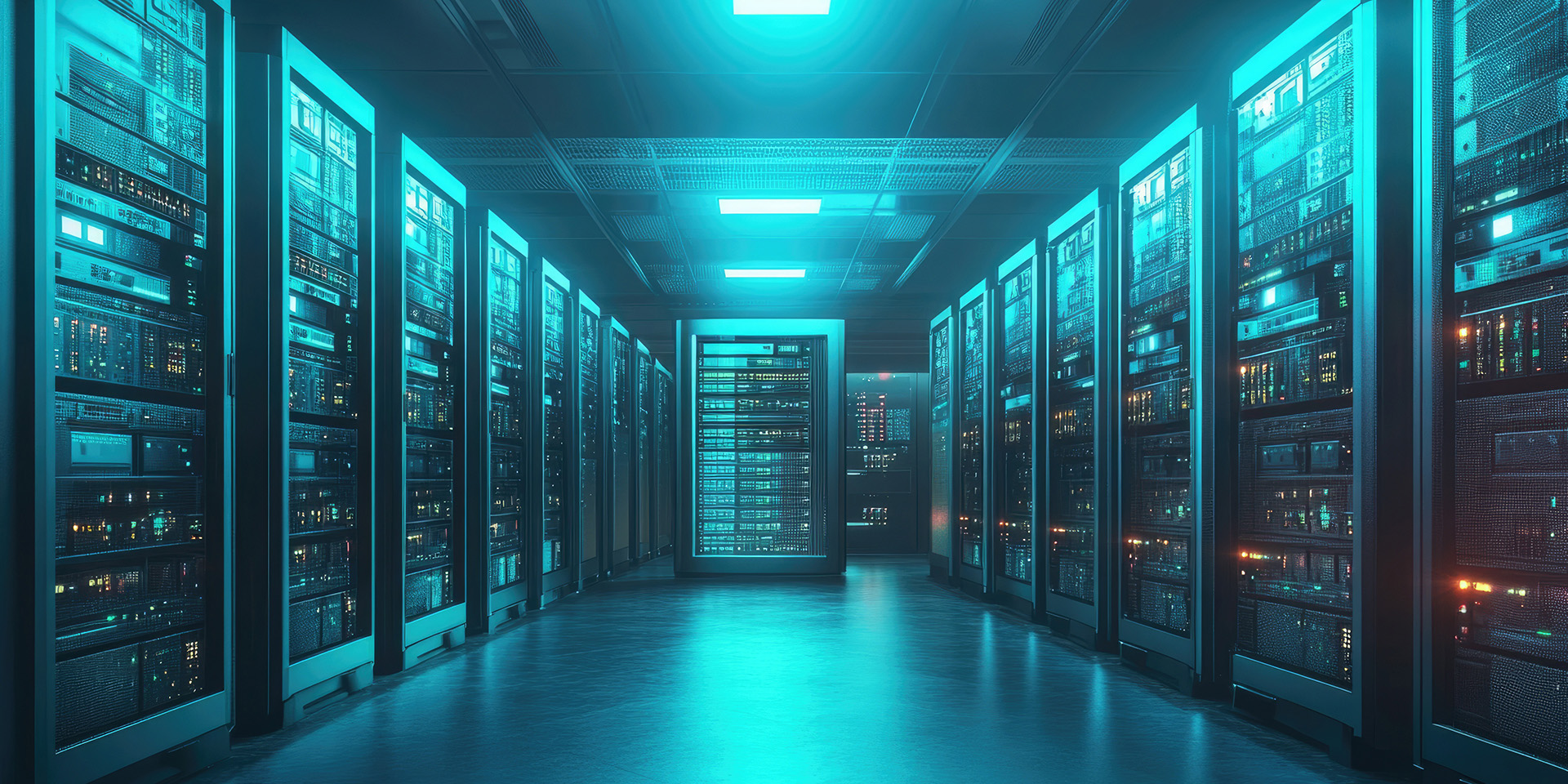
Hydrogen fuel cell systems help data centers secure reliable, resilient power while reducing grid dependence. Combined with renewables, batteries and smart energy management, they provide flexible on-site power as energy needs grow.
Every data center site comes with unique power demands, grid timelines and sustainability goals. Our Power Generation team is here to help you evaluate site feasibility, integrate with your energy system and fast-track your path to reliable power. Reach out directly to start the conversation.



Martina Wennesjö
International Sales Representative