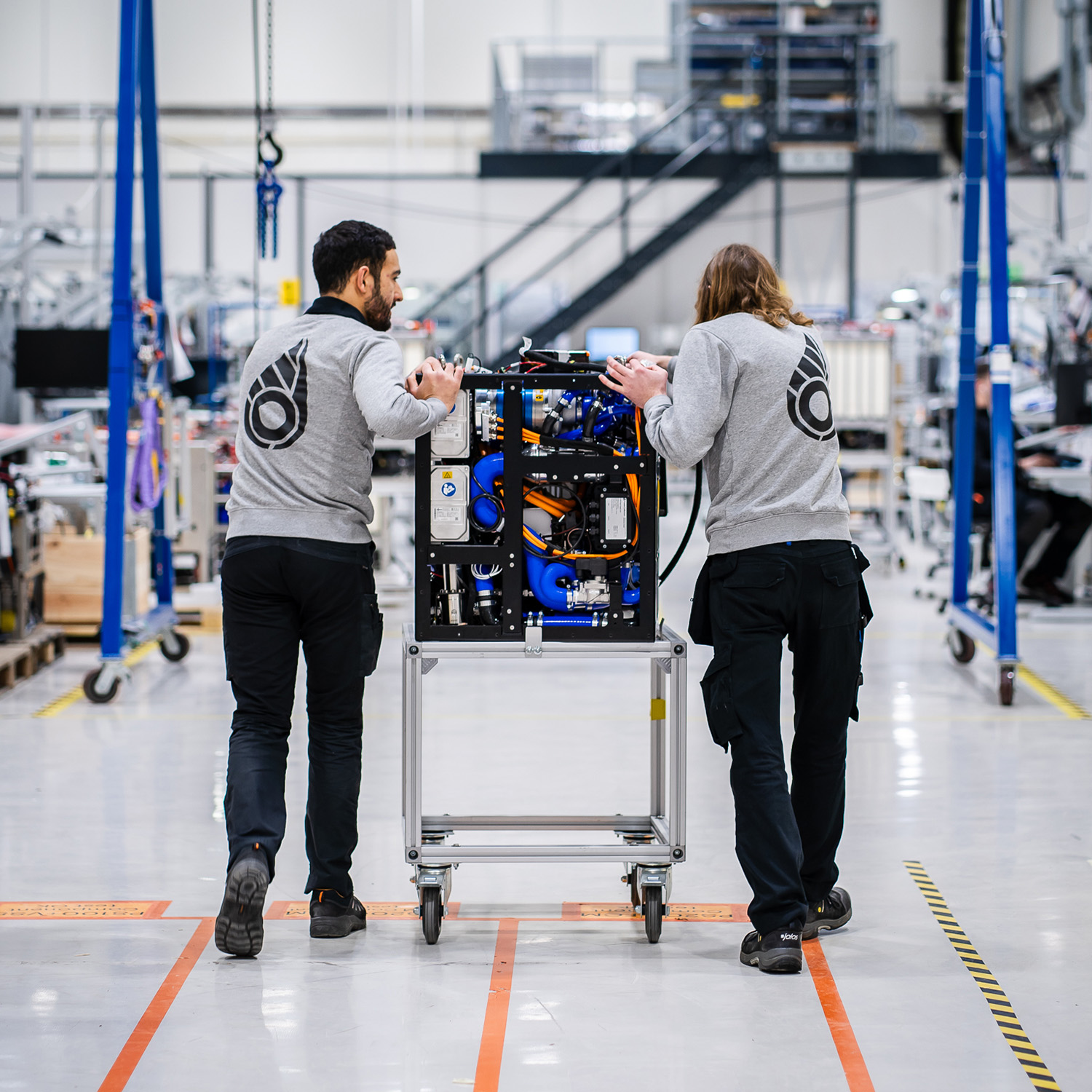
Hydrogen-electric fuel cell powered public transportation plays a key role when making our cities greener and more sustainable. Not only are fuel cell busses quieter and cheaper to operate than diesel busses, they also have zero emissions. The technology is already in use – helping to decrease the total societal cost in urban areas worldwide.
Core benefits of fuel cells
Our research shows several major benefits when comparing fuel cells and fossil fuels. A hydrogen-powered bus helps our cities become quieter and cleaner. Firstly, the noise level is lower compared to a diesel bus, contributing to a higher comfort level. A conventional bus emits carbon dioxide (CO2) and other pollutants such as nitrogen oxides (NOx) and sulphur oxides (SOx) whilst a hydrogen-powered bus has zero emissions. The cost for fuel is also lower for a fuel cell bus: 0.48 EUR/km compared to 0.60 EUR/km for a bus with a conventional drivetrain.
Societal benefits
Societies around the world are becoming increasingly aware of the societal costs linked to the use of fossil fuels – the emissions contain harmful components that cause health-related issues and increase healthcare costs. The noise generated by combustion engines has led to lower comfort levels for passengers and operators as well as the surrounding society. Hydrogen-powered public transportation, on the other hand, helps to decrease this societal cost. Lower noise levels and the absence of toxic emissions contributes to healthier citizens and greener cities.