 Next Generation Fuel Cell Stack Development in Project NEWBORN
Aviation
5 minute read
Next Generation Fuel Cell Stack Development in Project NEWBORN
Aviation
5 minute read

PROJECT NEWBORN aims to prove that hydrogen can power regional flight with water vapour as the only by product. PowerCell Group is proud to supply the next generation fuel cell stack at the heart of the demonstrator. This post explains the project ambition, the timeline, the technical role we play, what makes our stack special, and how NEWBORN moves hydrogen electric propulsion from component tests to a megawatt scale, aviation solution.
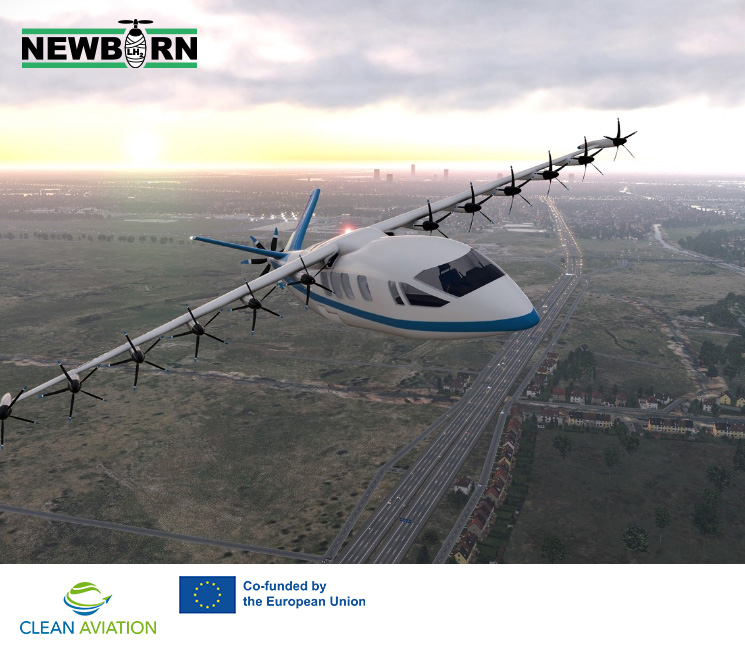
Project NEWBORN is supported by the Clean Aviation Joint Undertaking and its members.
Funded by the European Union under Grant Agreement No. 101101967.
NEWBORN (NExt generation high poWer fuel cells for airBORNe applications) is part of the Hydrogen Powered Aircraft pillar of the Clean Aviation Joint Undertaking. Its main objective is to create a megawatt propulsion system using hydrogen as the energy source, producing only water vapour as the emission.
The project is funded with a total of 44.8 million euro and runs over three and a half years. Part of the work carried out in the United Kingdom is supported by UK Research and Innovation. Thirteen partners, covering aircraft architecture, fuel cell systems, high power electronics and research, work together across 28 enabling technologies to deliver a Technology Readiness Level 4 ground demonstrator that focuses on whole aircraft efficiency rather than only pushing raw stack power density.
NEWBORN sets a practical, industry focused path: demonstrate modular one megawatt fuel cell power units that can be paralleled to exceed three megawatts, gather operational data and apply a stepping stone approach to certification and market entry. The project targets entry into service for CS 23 aircraft by 2030 and broader regional aircraft adoption by 2035.
Learn more about the project on the NEWBORN project website.
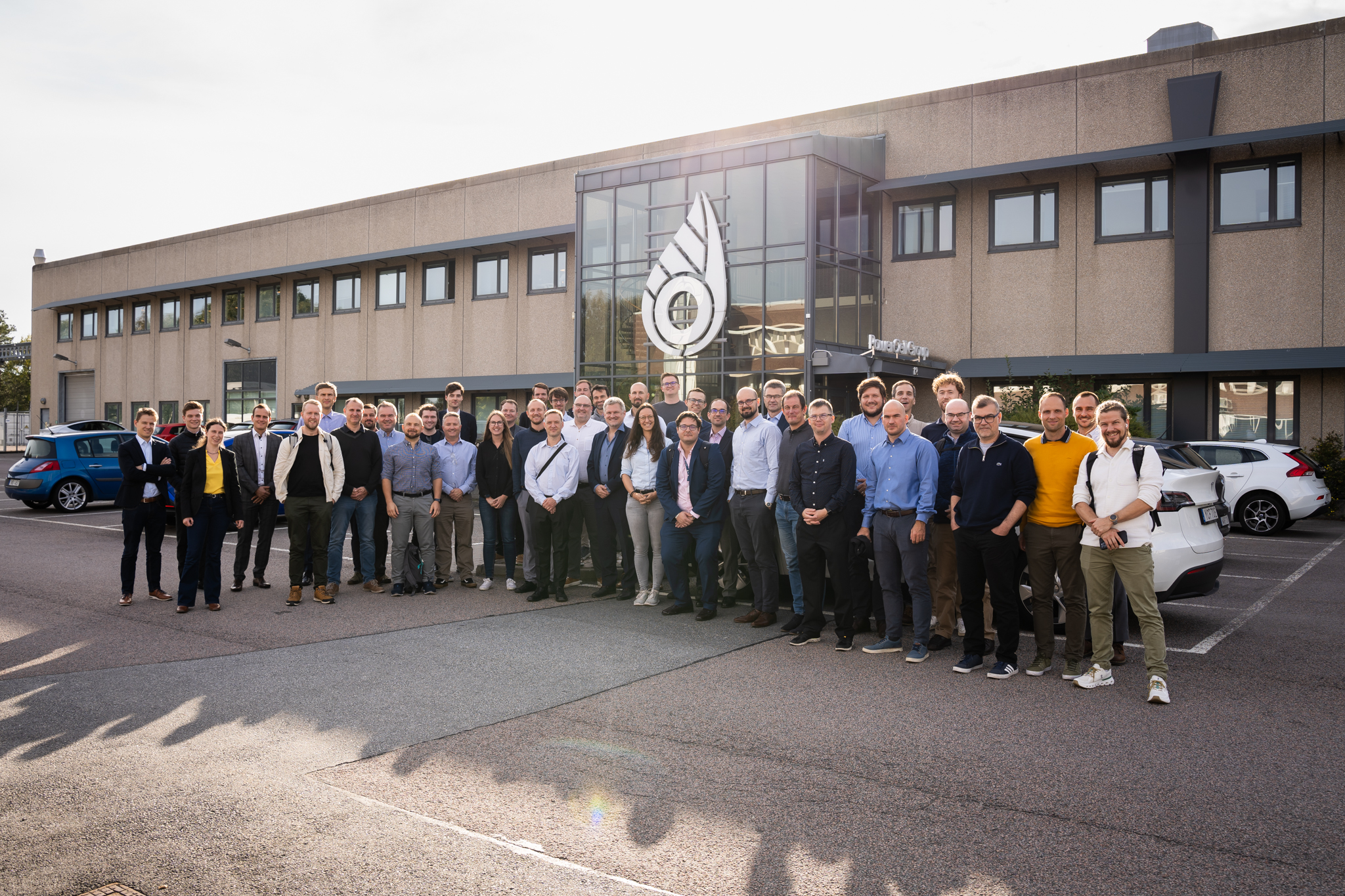
NEWBORN project team members at PowerCell Group headquarters
The system diagram behind NEWBORN shows a full propulsion chain: cryogenic liquid hydrogen tank and supply, air supply and treatment, PowerCell’s fuel cell stack, balance of plant power electronics and distribution, batteries for transient support, and the one megawatt propulsion motor and controller.
PowerCell supplies the fuel cell stack while partners such as Fraunhofer IISB provide cell voltage monitoring and power electronics, and the University of Nottingham develops the propulsion motor and controls. Honeywell and Pipistrel have key roles in system architecture, thermal management and integration. The visual underlines that a stack is only part of the story. Safe, efficient operation depends on a well matched balance of plant and system control.
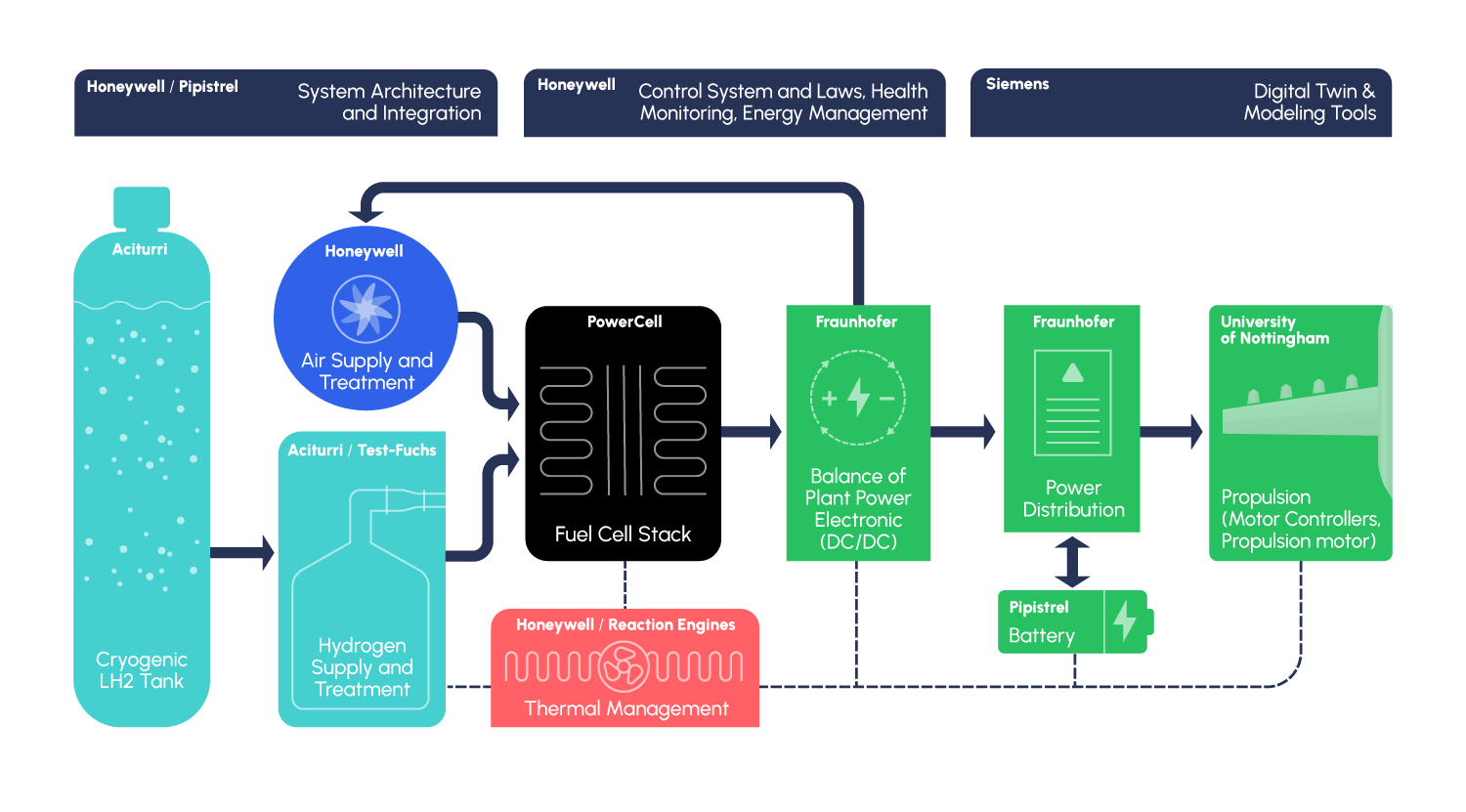
NEWBORN Project scope – Key concept
For PowerCell, each milestone in NEWBORN is an opportunity to validate stack performance, durability and modularity under conditions that mirror real operational demands. Our internal roadmap tracks how we move from requirements, to concept, to hardware and finally to validated stack performance within the propulsion system.
October 2023 – Stack requirements defined
Building on the system and aircraft requirements agreed in the consortium, we defined the technology and component‑level requirements for the NEWBORN stack. This fixed the performance envelope, interfaces and operating conditions, and provided a solid base for detailed design of the stack and its balance‑of‑stack components.
June 2024 – Preliminary MEA concept design finished
With requirements in place, we completed the preliminary membrane‑electrode assembly (MEA) concept for the aviation stack. This milestone translated performance and durability targets into a concrete MEA architecture that is both high‑performing and industrially realistic, enabling us to move from paper studies to engineering a buildable stack platform.
November 2024 – Fuel cell stack delivery and assembly
A 720 kilowatt fuel cell stack prototype was manufactured and assembled, representing the first full‑scale implementation of the NEWBORN aviation stack platform. This hardware allows us to characterise behaviour at stack level on dedicated test benches and supports its use in lab, rig and demonstrators.
December 2025 – Balance‑of‑stack sourced, prototyped and stack validated
By the end of 2025, sourcing and prototyping of the balance‑of‑stack (BoS) components were completed, and the aviation stack platform was validated against the performance targets defined earlier in the project. Test infrastructure was used to confirm that the stack and BoS work together as intended across realistic load cycles and that the stack is ready for integration into the full propulsion system demonstrator.
These PowerCell milestones feed directly into the wider NEWBORN roadmap, where the complete propulsion system ground demonstrator will reach TRL 4 and undergo full system testing in 2026.
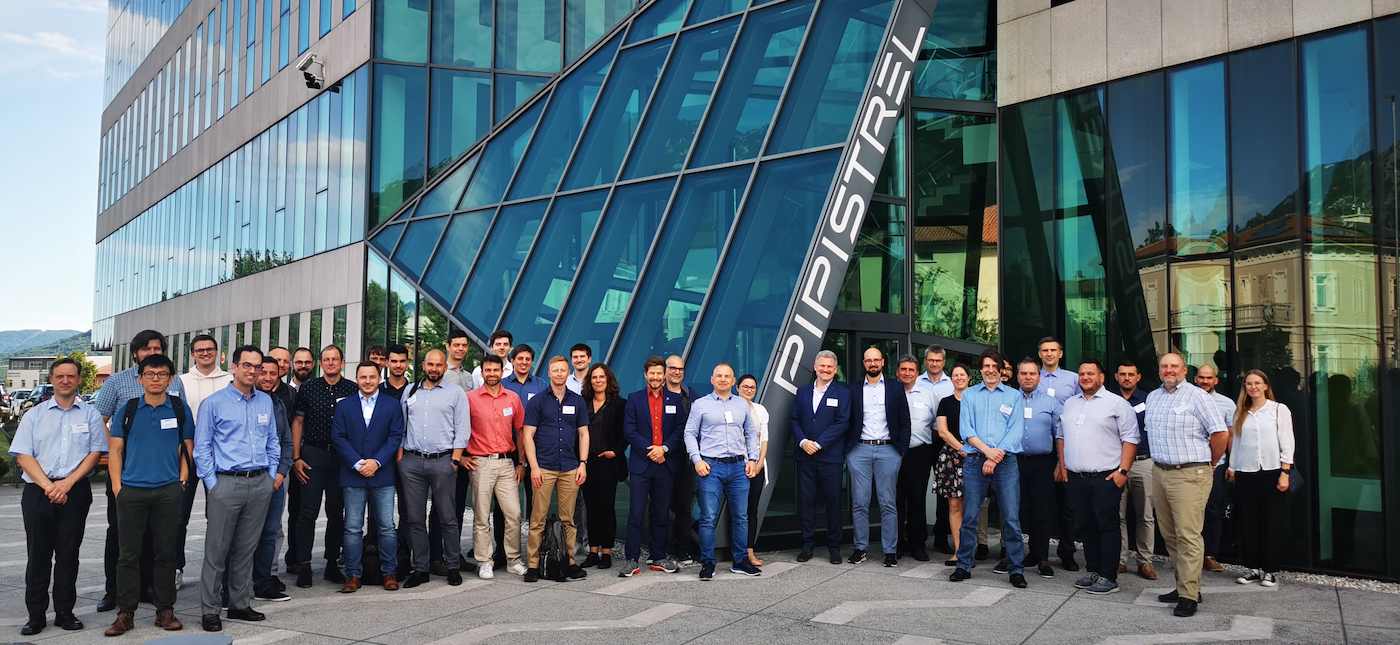
General Assembly for the NEWBORN Consortium at PIPISTREL in Slovenia.
PowerCell’s contribution to NEWBORN is a compact, aviation grade proton exchange membrane fuel cell stack platform. It is designed from the ground up for aircraft use. The platform delivers high single stack gravimetric power density and is engineered to be combined in arrays for megawatt applications. Key attributes we emphasise are power density, durability, modularity and system level efficiency.
We own the intellectual property for this new, higher power stack generation. Owning the intellectual property matters because it lets us iterate fast and allows us to make customers specific adjustments to ensure optimal integration and performance. It also strengthens European industrial leadership in hydrogen aviation components.
Performance so far has been encouraging across a range of tests and operating conditions, and has demonstrated steady power output. We have focused testing on transient response, thermal management and durability under realistic start stop and load cycling scenarios. Those tests aim to ensure the stack can follow propulsor power demands while maintaining longevity and safety.
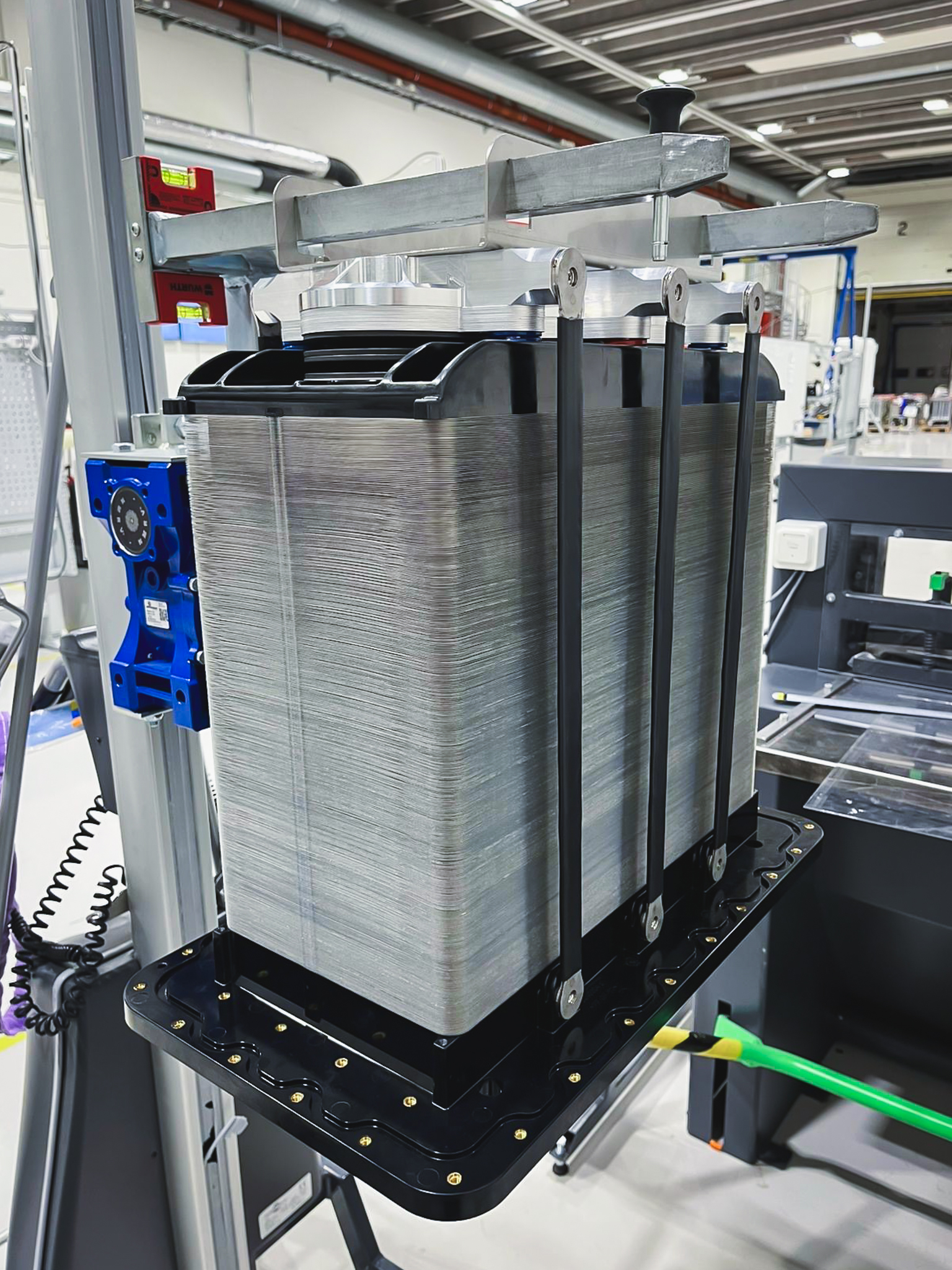
The next-generation fuel cell stack in production at PowerCell
“Designing a fuel cell stack for aviation is about much more than achieving the highest power figure on a test stand. From the outset, we have engineered this platform for very high gravimetric power density, while maintaining dynamic response and robustness. The stack is designed to be arrayed into megawatt-class systems and has demonstrated consistent performance in all tests to date. Developed within an AS9100-compliant framework and in close cooperation with partners from the aviation sector, the stack is conceived with certification, safety and integration in mind. Owning the underlying intellectual property allows us to refine and tailor the design as integration and certification challenges emerge.”
– Johanna Dombrovskis, Manager Fuel Cell Stack Technology at PowerCell Group

Johanna Dombrovskis
In June 2025 the NEWBORN fuel cell stack developed by PowerCell was presented at the International Paris Air Show at the CAJU booth. The exhibit brought attention from industry and public stakeholders and underlined the European Union’s commitment to clean aviation.
The demonstrator on show was a proton exchange membrane fuel cell stack platform, purpose built for aviation. A single stack delivers 300 kilowatts, and the architecture permits several stacks to be interconnected to reach power levels in the megawatt range.
That public demonstration is not an end in itself. It is an important validation step. Public demos are always complemented by detailed lab and rig testing to demonstrate repeatable performance and to collect data for system integration.
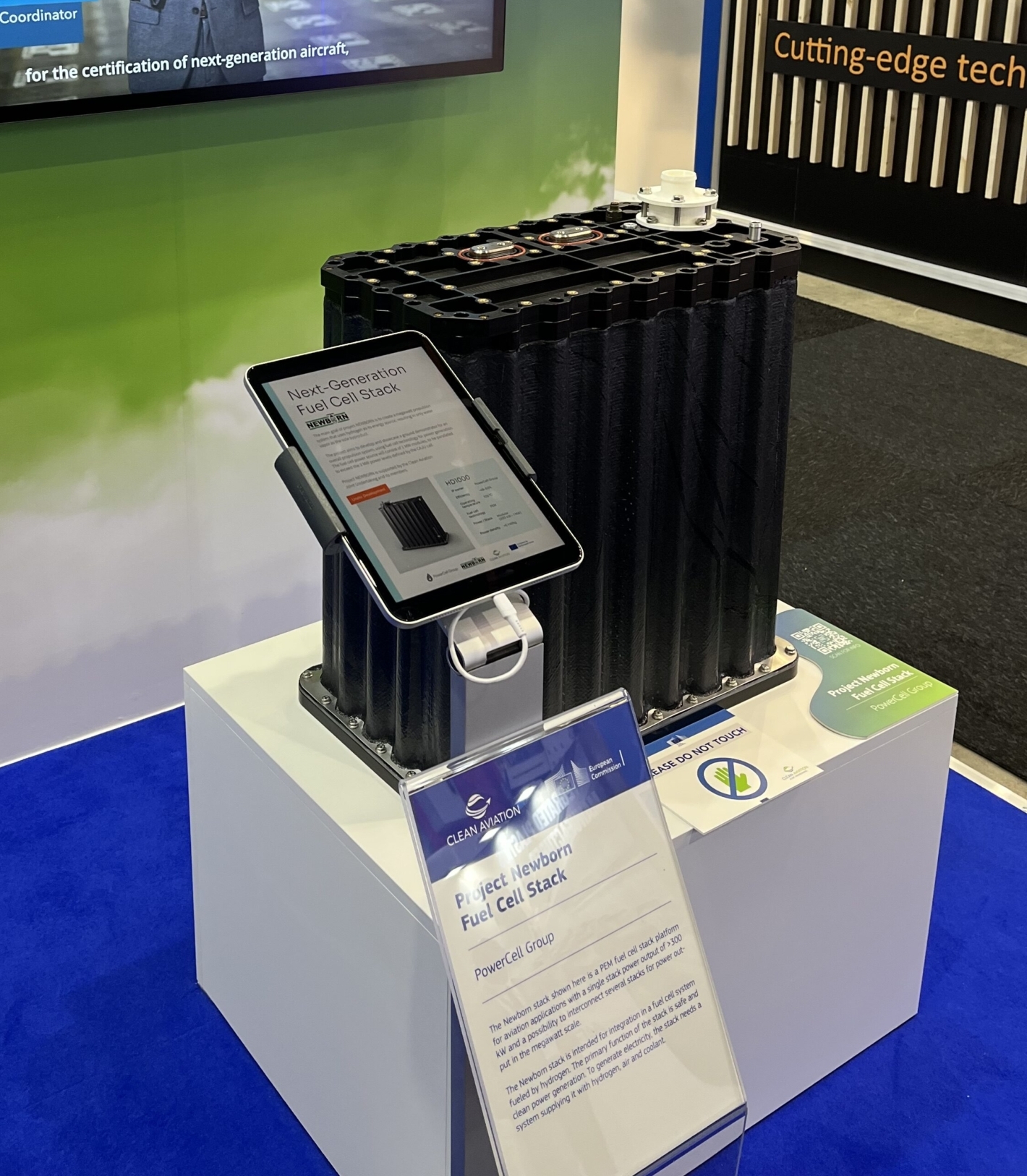
Demonstration unit of the fuel cell stack at the CAJU booth at Paris Air Show 2025
A core design philosophy for the fuel cell stack is modularity. Beyond that it is the highest power stack per cell row presented to date, it demonstrates how modular units can be paralleled to deliver megawatts.
This approach brings several benefits:
For PowerCell, modularity aligns with our industrial plans. We design the stack platform so we can connect multiple of stacks mechanically and electrically for easier integration with standardised balance of plant components.
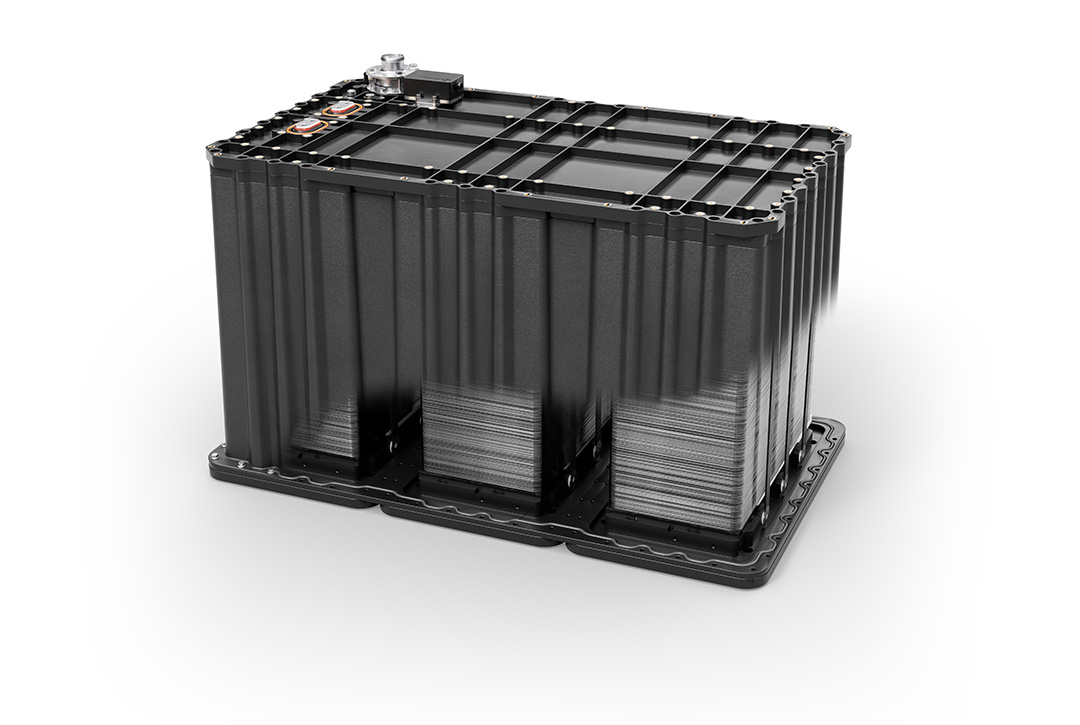
Fuel cell stack assembly concept rendering
As the project moves into integration and final ground testing, the focus shifts from component performance to system behaviour. Key near term tasks include:
The ground demonstrator is not the final destination. It is the crucial step that converts component level innovations into an aviation solution. The data, lessons and industrial practices that emerge from NEWBORN will guide future flight demonstrators and commercial development. In parallel, PowerCell will continue to refine the stack platform and scale manufacturing readiness.
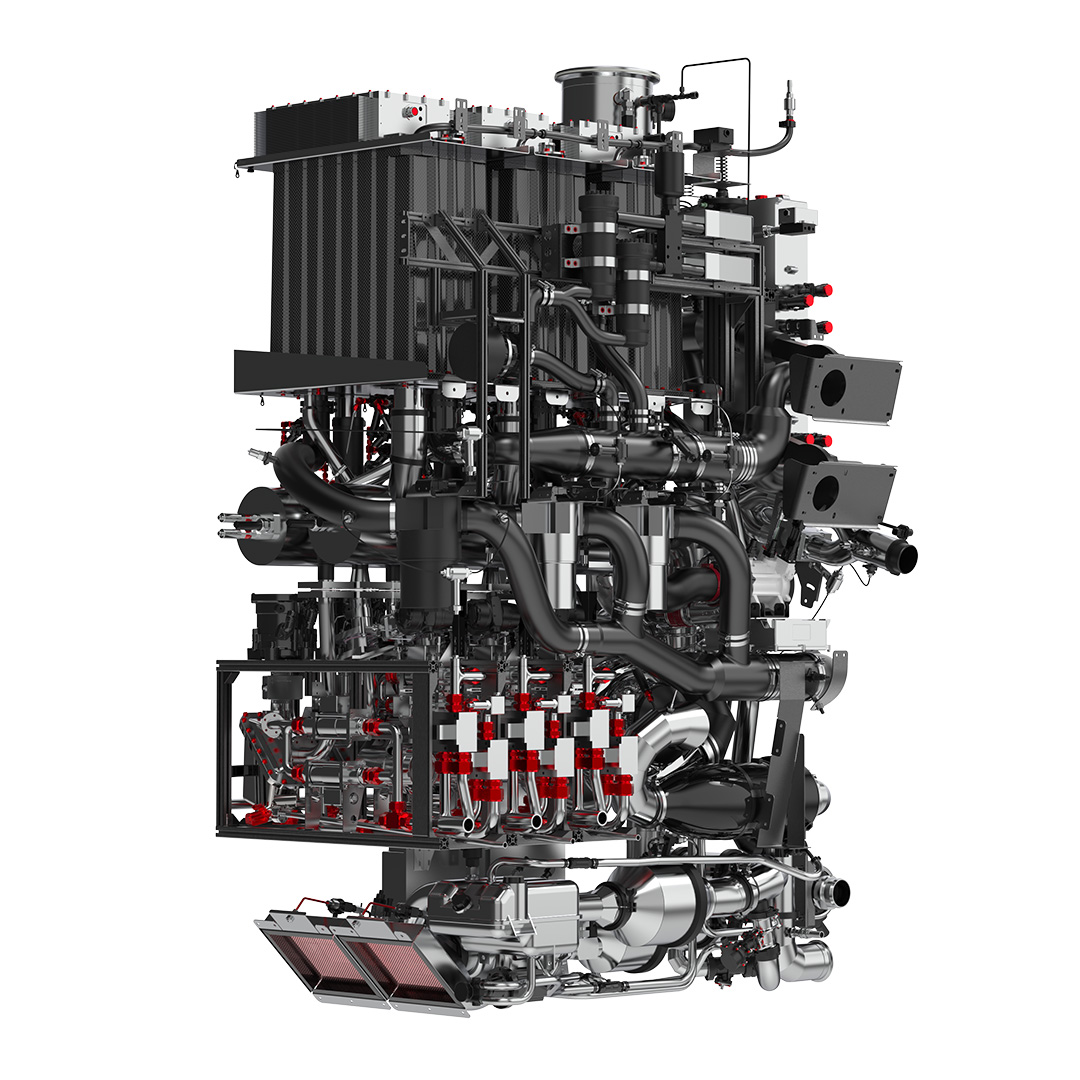
NEWBORN – System architecture model rendering
Watch the NEWBORN 3D model exhibited at the Clean Aviation Annual Forum, March 18-19 in Brussels, Belgium (LinkedIn)
NEWBORN shows what is possible when ambitious partners align around a shared target. PowerCell’s stack platform will become a building block for megawatt hydrogen propulsion. We are open to collaboration with aircraft manufacturers, system integrators and operators who want to explore hydrogen electric propulsion for regional and larger aircraft.
If you want to learn more about the stack, integration options, system performance or collaboration opportunities, contact our business development team. We will share technical briefings, demonstration data and discuss how PowerCell’s hydrogen electric solutions can fit your roadmap.
Contact us to find out how PowerCell can power your hydrogen electric future.

Ingegerd Bjerler – Business Manager Aviation, PowerCell Group
Next Generation Fuel Cell Stack Development in Project NEWBORN
Aviation
5 minute read
 IMO Delays Net-Zero Framework: CEO’s Comment
General
1 minute read
IMO Delays Net-Zero Framework: CEO’s Comment
General
1 minute read
 Fuel cells on course for clean, resilient port power
Power Generation
5 minute read
Fuel cells on course for clean, resilient port power
Power Generation
5 minute read
 Fuel cells and methanol chart the course to net zero shipping
Marine
5 minute read
Fuel cells and methanol chart the course to net zero shipping
Marine
5 minute read